ARE IMPLANTS RIGHT FOR YOU?
Who's a good candidate for implant treatment? You are, if you're in good health and have healthy gums and adequate bone to support an implant. You must be committed to thorough oral hygiene to keep your mouth healthy and to scheduling regular dental visits.
From start to finish the treatment is generally a three-part process that takes several months.
Step 1: A periodontist or oral surgeon surgically places the implant into the jaw, with the top of the implant slightly above the top of the bone. A screw is inserted into the implant to prevent gum tissue and other debris from entering. The implant is then covered by gum tissue and will remain covered for about 3-6 months while it fuses with the bone. Some swelling and/or tenderness is normal for a few days after the surgery. Pain medication is usually prescribed to help alleviate any discomfort. During the healing process a diet of soft foods, cold foods and warm soup are often recommended.
Step 2: The implant is uncovered and an extension, called a post is attached to the implant. The gum tissue is allowed to heal around the post. Some implants may require a second surgery in which a post is attached to connect the replacement teeth. After everything has healed, the implant and post can serve as the foundation for the new tooth, the crown.
Step 3: A general dentist can now make a crown for the implant. After the crown is complete it will be attached to the implant post. The size, shape, color and fit will be made to blend well with surrounding teeth.
Ask Dr. Hubbs if dental implants are an option for you!

Tuesday, July 22, 2014

Wednesday, June 25, 2014
Dental Implants
A great option for replacing teeth
If you are embarrassed or self conscious about missing teeth or wearing dentures, there's an alternative that could be right for you, dental implants. Dental implants can replace missing or badly diseased teeth. Dental implants provide comfort and stability by functioning exactly like a natural tooth.
What is an implant?
Implants are manufactured "anchors" that look like cylinders or screws. They are artificial replacements for natural tooth roots. They are made of titanium and other materials that are well suited to the human body. Implants attach to the upper or lower jaw bone to become a stable base for one or sometimes more custom artificial replacement teeth, called dental crowns. Dental implants can also be used to support a partial or full denture.
People of all ages have benefited from the replacement of missing teeth through dental implants for decades. The biggest benefit most dental professionals hear from patients is finally being able to chew their favorite foods again and it be completely comfortable! Implants can also provide a more youthful look by filling out the face that otherwise could look sunken in because of missing teeth. Another benefit that implants provide is, they are brushed and flossed just like natural teeth. No more taking out dentures or partials to soak and clean and no more adhesives.
Wednesday, June 11, 2014
Denture and Partial Replacements:
The normal lifetime of a denture or partial is three to five years, but this can widely vary depending on the patient. Over time dentures or partials may need relining, rebasing, or replacing. Relining is when the lab adds new material to the underside of the denture or partial base to fit your gums. Rebasing is when a new base is made using the existing denture as a model. The artificial teeth from the old denture are used on the new base. The mouth changes naturally with age. Jaws may line up differently as bones and gums ridges recede and shrink. At some point your denture will have to be remade.
Tuesday, May 27, 2014
Caring For Your Dentures and Partials
Like natural teeth, dentures and partials require daily oral hygiene. Here are some tips to care for them:
1. Clean your denture and partial daily
Take them out of your mouth and carefully rinse off loose food particles.
Wet a tooth brush or specially made tooth brush for dentures. Make sure
that the brush is soft bristled. Using mild soap, you can gently brush all
surfaces. Soaking them in a mix of half water and half peroxide is also helpful
for removing tough stains. Denture cleaners are okay also. Don't use regular
tooth paste as it can be abrasive and scratch the teeth on the partial or denture.
2. Your Denture can be very delicate
It can break even if dropped just a few inches from a hard surface. When
cleaning your denture place a folded towel in a sink and fill with cool water.
3. Denture Adjustments
Come and see us if your denture breaks, chips, or if the denture starts to
feel loose. Dr. Hubbs is the only one who should make adjustments to your
denture. Do not try to adjust them yourself. This can harm both the denture
and your health.
1. Clean your denture and partial daily
Take them out of your mouth and carefully rinse off loose food particles.
Wet a tooth brush or specially made tooth brush for dentures. Make sure
that the brush is soft bristled. Using mild soap, you can gently brush all
surfaces. Soaking them in a mix of half water and half peroxide is also helpful
for removing tough stains. Denture cleaners are okay also. Don't use regular
tooth paste as it can be abrasive and scratch the teeth on the partial or denture.
2. Your Denture can be very delicate
It can break even if dropped just a few inches from a hard surface. When
cleaning your denture place a folded towel in a sink and fill with cool water.
3. Denture Adjustments
Come and see us if your denture breaks, chips, or if the denture starts to
feel loose. Dr. Hubbs is the only one who should make adjustments to your
denture. Do not try to adjust them yourself. This can harm both the denture
and your health.
Tuesday, May 13, 2014
Getting used to your Dentures Or Partial
New dentures or partials may feel odd or uncomfortable for the first couple of weeks. This is normal. If you have an area that is cutting your tongue or cheek please call our office. Keep wearing your denture or partial until you get used to them. The lower one may feel especially loose until the muscles of your cheeks and tongue learn to hold it in place. You may have extra saliva for a short time. Some soreness should be expected for the first week or two. We will check on your progress and make any adjustments needed to make you more comfortable. When you replace missing teeth, eating is easier. But it takes practice.
Here are some things that can help...
1. Begin by eating soft foods cut into small pieces.
2. Chew on both sides of the mouth to keep pressure even.
3. You will need to practice talking with your new denture or partial.
-Try reading out loud and repeating tricky words in front of the mirror.
-Talk slowly to prevent muffled speech.
If your dentures slip out of place when you laugh, cough, or smile, bite down and swallow to reposition them.
Wednesday, April 30, 2014
Dentures/Partials
What are Dentures and Partials?
Dentures and Partials are a detachable, prosthetic substitute for a person's missing natural teeth and bone. Dentures and Partials are made by your dentist to replace any or all of your missing teeth are well as adjoining tissue. Don't expect dentures or partials to function like your natural teeth.
Conventional Dentures:
Conventional Dentures are made after all of the remaining teeth are taken out and the mouth and gum tissue has fully healed. This healing process can take up to three months.
Immediate Dentures:
Immediate Dentures can be placed in the mouth right away and do not require a healing process. You will require laboratory relines or new dentures after 6 months.
Removable Partial Denture:
A partial denture is made up of a plastic base that is colored to match the shade of your gums. Replacement teeth are then attached to the base.

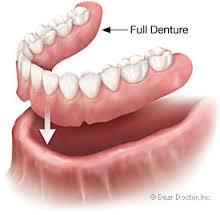
Dentures and Partials are a detachable, prosthetic substitute for a person's missing natural teeth and bone. Dentures and Partials are made by your dentist to replace any or all of your missing teeth are well as adjoining tissue. Don't expect dentures or partials to function like your natural teeth.
Conventional Dentures:
Conventional Dentures are made after all of the remaining teeth are taken out and the mouth and gum tissue has fully healed. This healing process can take up to three months.
Immediate Dentures:
Immediate Dentures can be placed in the mouth right away and do not require a healing process. You will require laboratory relines or new dentures after 6 months.
Removable Partial Denture:
A partial denture is made up of a plastic base that is colored to match the shade of your gums. Replacement teeth are then attached to the base.
Monday, April 14, 2014
XRAYS
During a regular dental exam, it can sometimes be difficult to detect damage and disease without the use of X-rays. The frequency of getting X-rays depends on your oral health, age, and risk for disease. Most often, children require X-rays more often than adults because they are still developing and their teeth are more likely to be affected by decay than adults.
If you are a new patient, most times Dr. Hubbs will request X-rays to determine the present status of your oral health and have a baseline to help identify changes that may occur in the future. New sets of X-rays may be needed to determine any new cavities, determine the status of current gum health, or evaluate the growth and development of your teeth.
It is important to remember that Dental X-rays are safe, but they do require very low levels of radiation exposure, which makes the risk of potentially harmful effects extremely small. There are tools that are used to limit the body's exposure to radiation and every precaution is taken to ensure that radiation exposure is As Low As Reasonable Achievable (the ALARA principle). We will provide you with a leaded apron prior to any X-ray's to minimize exposure to the abdomen and should be used when any dental radiograph is taken. If you are pregnant, tell your dentist and precautions will be taken.

If you are a new patient, most times Dr. Hubbs will request X-rays to determine the present status of your oral health and have a baseline to help identify changes that may occur in the future. New sets of X-rays may be needed to determine any new cavities, determine the status of current gum health, or evaluate the growth and development of your teeth.
It is important to remember that Dental X-rays are safe, but they do require very low levels of radiation exposure, which makes the risk of potentially harmful effects extremely small. There are tools that are used to limit the body's exposure to radiation and every precaution is taken to ensure that radiation exposure is As Low As Reasonable Achievable (the ALARA principle). We will provide you with a leaded apron prior to any X-ray's to minimize exposure to the abdomen and should be used when any dental radiograph is taken. If you are pregnant, tell your dentist and precautions will be taken.
Subscribe to:
Posts (Atom)